How can you be loud without permission?
Natascha Sadr Haghighian's class at the 39th European Media Art Festival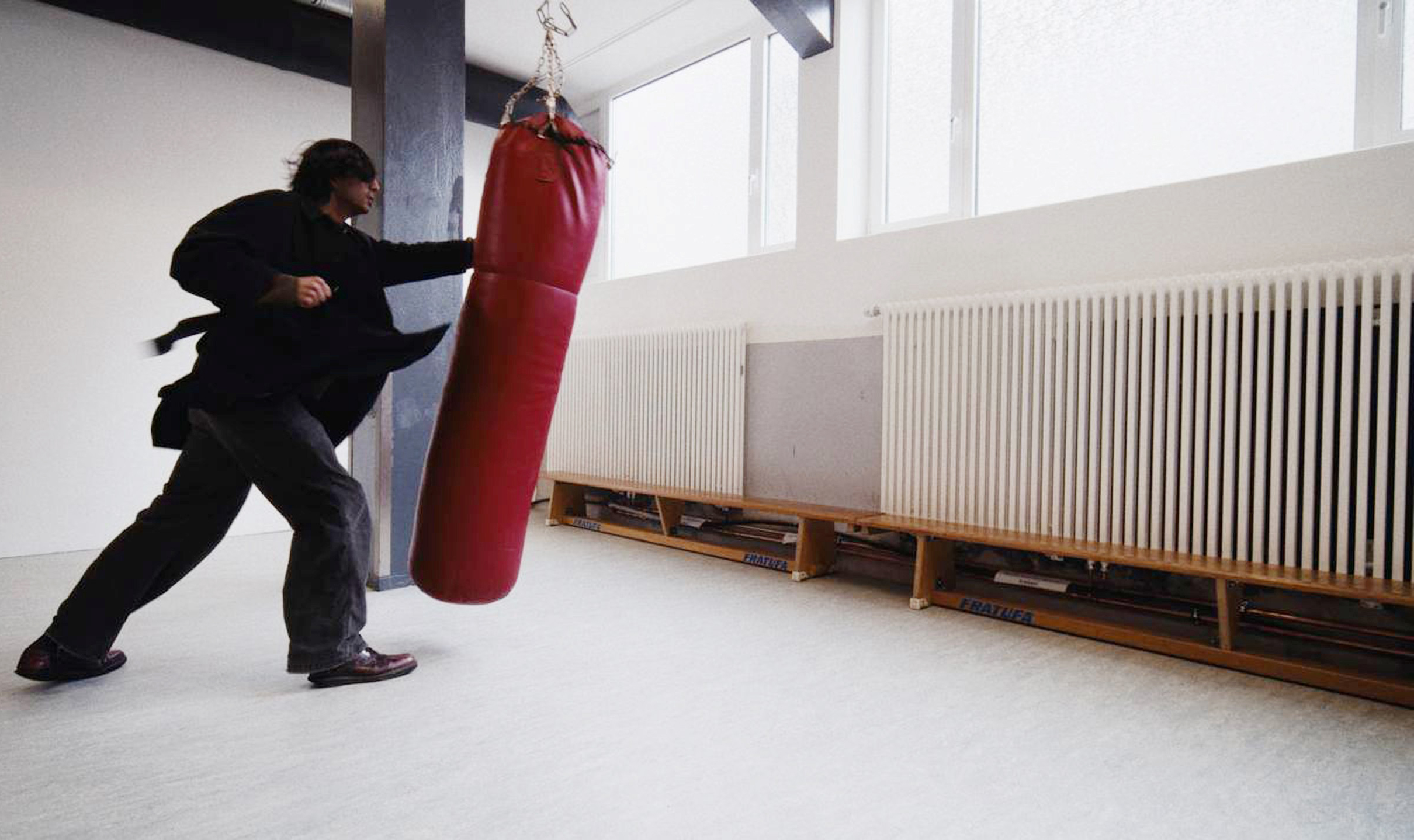
The 39th European Media Art Festival (EMAF) will take place in Osnabrück from April 22 to 26, 2026. With the thematic focus “An Incomplete Assembly,” talks, exhibitions, film programs, performances, and workshops will explore what institutions are capable of, but also how the standardization of language, bodies, spaces, and time reinforces existing structures, and how artistic and non-artistic movements confront these normative demands.
One of the festival sections is the EMAF Campus. There, classes and groups from art colleges and universities will present current works and projects produced specifically for the festival. The HfK Bremen is represented at the Haus der Jugend, Große Gildewart 6-9, with “Aloud” by Natascha Sadr Haghighian’s class, which focuses on various forms of installation and sculpture, regardless of medium or format.
The group frequently works on collaborative pieces or projects and then performs under the name Any Jackson Chaturanga. This is also the case in Osnabrück. Participants include: Mustafa Al Zubaidi, Eghbal Joudi, Jashua Bustos Chumasero, Stefan Pente, Djamila Köckritz, Marina Marcomini, Ruomeng Huang, Nasrin Larijani, Moira Anouk Meine Fuentes, Pelle Schemmel, Tabea Felicitas Amrei Erhart, Bubu Mosiashvili, Kevi Teli, and Gabriela Valdespino Prieto.
For “Aloud,” they use volume, time, movement, and mass as materials for collective actions. A gymnasium, as a place of training, serves as the starting point for the students’ exploration of bodies in a state of tense anticipation, in preparation. This anticipation takes hold of the body before anything happens—a form of knowledge that precedes language. It is as if one were already in a place without having reached it. In individual and collective choreographies, the students then explore what can be heard, said, and experienced within the framework of established structures. How can one be loud without permission?