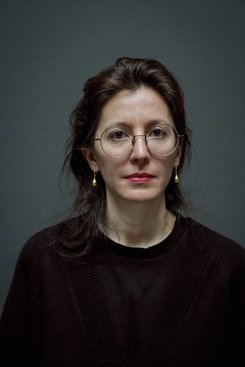
Prof. Asli Serbest
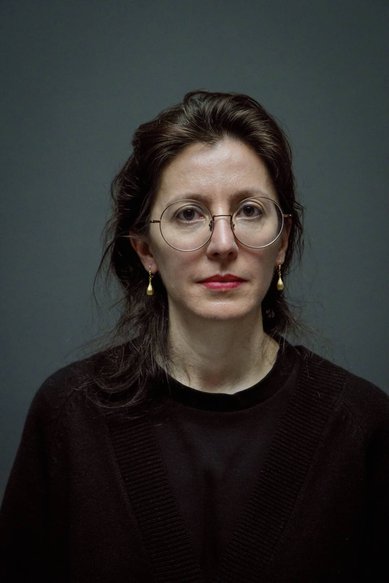
- Study programme Digitale Medien, Freie Kunst, Integriertes Design
- Email asli.serbest@hfk-bremen.de
- Website http://aslimona.xyz
Vita
Asli Serbest works in collaborations across spatial, image, sound, and text practices. Her processed-based projects evolve into installations, objects, temporary spaces, videos, sound, and texts. They play and replay architecture histories, events, and movements, with the aim to rethink the production of space and implied power relations.
Following their feminist constitution these projects propose themselves less as fixed spaces and objects than as physical or digital versions that share an interest in variation and distortion of form and scale.
Asli Serbest has been a professor teaching in the architecture and art fields at Stuttgart State Academy of Art and Rhode Island School of Design, among others. After her studies in Istanbul, she completed her doctorate on speculative spatial strategies and a critique of Modernism.
She publishes and exhibits internationally, among others at Biennale di Venezia, Württembergischer Kunstverein Stuttgart, Riverrun Istanbul, Pinakothek der Moderne München, Storefront for Art and Architecture New York, Pera Museum Istanbul, HKW Berlin, Vancouver Art Gallery, Künstlerhaus Stuttgart, New Museum New York; in e-flux journal, Volume Magazine, Perspecta, The Gradient-Walker Art Center, Istanbul Art News, AArchitecture, Deutschlandfunk, etc.
Asli Serbest is the co-editor of Junk Jet, an independent magazine on art, architecture, and media.
In 2019, she co-curated the 7th International Sinop Biennial 2019 under the title of “A Politics of Location” —an exhibition based on situated practices and contextual processes in the Anatolian Black Sea region.
Current courses
- This project brings together the fields of Performance and New Musical Forms and Temporary Spaces to activate the ship Dauerwelle as a temporary artistic and institutional space within the context of the Breminale. Starting from the drifting boat, the project approaches the ship as a performative space shaped by infrastructures, regulations, urban dynamics, and cultural expectations, including historical maritime imaginaries, gendered mythologies, and notions of belonging. Based on Situationist analyses of spectacle and dérive, the project critically examines how artistic practices operate within temporary festival conditions and how institutions situate themselves in public space. We will develop individual or collective works at the intersection of spatial practices, performance, sound, installation, and time-based media, based on site-specific and situated research shaped by specific geographies, embodied experiences, and temporary encounters. The works are developed in direct relation to the ship and its temporary festival context. The project includes conceptual input, discussions, collective planning, and on-site production phases, concluding with the presentation of works during the Breminale (01.07. – 05.07.). Introduction: 09.04.2026, 10:00, Atelier 3.04.050 (Segment 4) --- This project brings together the fields of Performance and New Musical Forms and Temporary Spaces to activate the ship Dauerwelle as a temporary artistic and institutional space within the context of the Breminale. Starting from the drifting boat, the project approaches the ship as a performative space shaped by infrastructures, regulations, urban dynamics, and cultural expectations, including historical maritime imaginaries, gendered mythologies, and notions of belonging. Based on Situationist analyses of spectacle and dérive, the project critically examines how artistic practices operate within temporary festival conditions and how institutions situate themselves in public space. We will develop individual or collective works at the intersection of spatial practices, performance, sound, installation, and time-based media, based on site-specific and situated research shaped by specific geographies, embodied experiences, and temporary encounters. The works are developed in direct relation to the ship and its temporary festival context. The project includes conceptual input, discussions, collective planning, and on-site production phases, concluding with the presentation of works during the Breminale (01.07. – 05.07.). Introduction: 09.04.2026, 10:00, Atelier 3.04.050 (Segment 4)
-
- As part of the Integrierendes Projekt, students may choose to participate in the Temporary Spaces Class program. Following a practice-based and research-oriented framework, the program includes workshops, lectures, excursions, reading groups, plenums, and a class exhibition. With the aim to critically reflect space as a time-based and location-based category, Temporary Spaces Class addresses historical, political, social, technological, and aesthetic aspects of our built environments and their material structures. Beyond disciplinary conventions and boundaries, the class explores practices that include various media and experimentation with space, at different scales, from urban interventions to video, installation, performance, sound, and text. The works are research-based and engage with topics and methods ranging from site-specific approaches to historical finds, from feminist manifestos to queer theories, from critiques of modernism and standardization to socialist architectural utopias and urgent urban questions, such as the housing crisis. Temporary Spaces Class organizes participatory feedback sessions that include collective readings and discussions. In regular gatherings, related to their particular ideas and practices, participants come together to discuss processes and approaches, work with other class members and guests and develop their own (or collective) projects and reflexive aesthetic experiences. Collective gatherings are in English. This semester, Temporary Spaces Class engages in activating the ship Dauerwelle as a temporary artistic and institutional space within the context of the Breminale. For more information, please see the module description Dauerwelle ~ Drift as a Method. Previously, the class has collaborated with and exhibited at institutions such as GAK Bremen, Pera Museum Istanbul, Großer Wasserspeicher Berlin, Kunsthalle Baden-Baden, documenta fifteen, Sinop Biennial, Weserburg Museum Bremen, Top e.V. Berlin, theater.prekariat Stuttgart, Schwankhalle Bremen, Theater Bremen, Württembergischer Kunstverein, etc. ****Those who would like to take part in the Temporary Spaces program and plenum are invited to send an email by April 04, including their portfolio and a short statement about their interest in the class.**** Plenum: Thursdays starting from 10:00, Temporary Spaces Atelier 3.04.050 (Segment 4) --- As part of the Integrierendes Projekt, students may choose to participate in the Temporary Spaces Class program. Following a practice-based and research-oriented framework, the program includes workshops, lectures, excursions, reading groups, plenums, and a class exhibition. With the aim to critically reflect space as a time-based and location-based category, Temporary Spaces Class addresses historical, political, social, technological, and aesthetic aspects of our built environments and their material structures. Beyond disciplinary conventions and boundaries, the class explores practices that include various media and experimentation with space, at different scales, from urban interventions to video, installation, performance, sound, and text. The works are research-based and engage with topics and methods ranging from site-specific approaches to historical finds, from feminist manifestos to queer theories, from critiques of modernism and standardization to socialist architectural utopias and urgent urban questions, such as the housing crisis. Temporary Spaces Class organizes participatory feedback sessions that include collective readings and discussions. In regular gatherings, related to their particular ideas and practices, participants come together to discuss processes and approaches, work with other class members and guests and develop their own (or collective) projects and reflexive aesthetic experiences. Collective gatherings are in English. This semester, Temporary Spaces Class engages in activating the ship Dauerwelle as a temporary artistic and institutional space within the context of the Breminale. For more information, please see the module description Dauerwelle ~ Drift as a Method. Previously, the class has collaborated with and exhibited at institutions such as GAK Bremen, Pera Museum Istanbul, Großer Wasserspeicher Berlin, Kunsthalle Baden-Baden, documenta fifteen, Sinop Biennial, Weserburg Museum Bremen, Top e.V. Berlin, theater.prekariat Stuttgart, Schwankhalle Bremen, Theater Bremen, Württembergischer Kunstverein, etc. ****Those who would like to take part in the Temporary Spaces program and plenum are invited to send an email by April 04, including their portfolio and a short statement about their interest in the class.**** Plenum: Thursdays starting from 10:00, Temporary Spaces Atelier 3.04.050 (Segment 4)
- For the development of their Individuelles Mastervorhaben, students may join the scheduled plenums and individual meetings of the Temporary Spaces Class program, which also includes other formats (workshops, lectures, excursions, reading groups, exhibitions) to support critical reflection, spatial exploration, and continuous development. With the aim to critically reflect space as a time-based and location-based category, Temporary Spaces Class addresses historical, political, social, technological, and aesthetic aspects of our built environments and their material structures. Beyond disciplinary conventions and boundaries, the class explores practices that include various media and experimentation with space, at different scales, from urban interventions to video, installation, performance, sound, and text. The works are research-based and engage with topics and methods ranging from site-specific approaches to historical finds, from feminist manifestos to queer theories, from critiques of modernism and standardization to socialist architectural utopias and urgent urban questions, such as the housing crisis. Temporary Spaces Class organizes participatory feedback sessions that include collective readings and discussions. In regular gatherings, related to their particular ideas and practices, participants come together to discuss processes and approaches, work with other class members and guests and develop their own (or collective) projects and reflexive aesthetic experiences. Collective gatherings are in English. This semester, Temporary Spaces Class engages in activating the ship Dauerwelle as a temporary artistic and institutional space within the context of the Breminale. For more information, please see the module description Dauerwelle ~ Drift as a Method. Previously, the class has collaborated with and exhibited at institutions such as GAK Bremen, Pera Museum Istanbul, Großer Wasserspeicher Berlin, Kunsthalle Baden-Baden, documenta fifteen, Sinop Biennial, Weserburg Museum Bremen, Top e.V. Berlin, theater.prekariat Stuttgart, Schwankhalle Bremen, Theater Bremen, Württembergischer Kunstverein, etc. ****Those who would like to take part in the Temporary Spaces program and plenum are invited to send an email by April 04, including their portfolio and a short statement about their interest in the class.**** Plenum: Thursdays starting from 10:00, Temporary Spaces Atelier 3.04.050 (Segment 4) ---
- For the development of their Individuelles Mastervorhaben, students may join the scheduled plenums and individual meetings of the Temporary Spaces Class program, which also includes other formats (workshops, lectures, excursions, reading groups, exhibitions) to support critical reflection, spatial exploration, and continuous development. With the aim to critically reflect space as a time-based and location-based category, Temporary Spaces Class addresses historical, political, social, technological, and aesthetic aspects of our built environments and their material structures. Beyond disciplinary conventions and boundaries, the class explores practices that include various media and experimentation with space, at different scales, from urban interventions to video, installation, performance, sound, and text. The works are research-based and engage with topics and methods ranging from site-specific approaches to historical finds, from feminist manifestos to queer theories, from critiques of modernism and standardization to socialist architectural utopias and urgent urban questions, such as the housing crisis. Temporary Spaces Class organizes participatory feedback sessions that include collective readings and discussions. In regular gatherings, related to their particular ideas and practices, participants come together to discuss processes and approaches, work with other class members and guests and develop their own (or collective) projects and reflexive aesthetic experiences. Collective gatherings are in English. This semester, Temporary Spaces Class engages in activating the ship Dauerwelle as a temporary artistic and institutional space within the context of the Breminale. For more information, please see the module description Dauerwelle ~ Drift as a Method. Previously, the class has collaborated with and exhibited at institutions such as GAK Bremen, Pera Museum Istanbul, Großer Wasserspeicher Berlin, Kunsthalle Baden-Baden, documenta fifteen, Sinop Biennial, Weserburg Museum Bremen, Top e.V. Berlin, theater.prekariat Stuttgart, Schwankhalle Bremen, Theater Bremen, Württembergischer Kunstverein, etc. ****Those who would like to take part in the Temporary Spaces program and plenum are invited to send an email by April 04, including their portfolio and a short statement about their interest in the class.**** Plenum: Thursdays starting from 10:00, Temporary Spaces Atelier 3.04.050 (Segment 4) --- For the development of their Individuelles Mastervorhaben, students may join the scheduled plenums and individual meetings of the Temporary Spaces Class program, which also includes other formats (workshops, lectures, excursions, reading groups, exhibitions) to support critical reflection, spatial exploration, and continuous development. With the aim to critically reflect space as a time-based and location-based category, Temporary Spaces Class addresses historical, political, social, technological, and aesthetic aspects of our built environments and their material structures. Beyond disciplinary conventions and boundaries, the class explores practices that include various media and experimentation with space, at different scales, from urban interventions to video, installation, performance, sound, and text. The works are research-based and engage with topics and methods ranging from site-specific approaches to historical finds, from feminist manifestos to queer theories, from critiques of modernism and standardization to socialist architectural utopias and urgent urban questions, such as the housing crisis. Temporary Spaces Class organizes participatory feedback sessions that include collective readings and discussions. In regular gatherings, related to their particular ideas and practices, participants come together to discuss processes and approaches, work with other class members and guests and develop their own (or collective) projects and reflexive aesthetic experiences. Collective gatherings are in English. This semester, Temporary Spaces Class engages in activating the ship Dauerwelle as a temporary artistic and institutional space within the context of the Breminale. For more information, please see the module description Dauerwelle ~ Drift as a Method. Previously, the class has collaborated with and exhibited at institutions such as GAK Bremen, Pera Museum Istanbul, Großer Wasserspeicher Berlin, Kunsthalle Baden-Baden, documenta fifteen, Sinop Biennial, Weserburg Museum Bremen, Top e.V. Berlin, theater.prekariat Stuttgart, Schwankhalle Bremen, Theater Bremen, Württembergischer Kunstverein, etc. ****Those who would like to take part in the Temporary Spaces program and plenum are invited to send an email by April 04, including their portfolio and a short statement about their interest in the class.**** Plenum: Thursdays starting from 10:00, Temporary Spaces Atelier 3.04.050 (Segment 4)
- As part of the Integrierendes Projekt, students may choose to participate in the Temporary Spaces Class program. Following a practice-based and research-oriented framework, the program includes workshops, lectures, excursions, reading groups, plenums, and a class exhibition. With the aim to critically reflect space as a time-based and location-based category, Temporary Spaces Class addresses historical, political, social, technological, and aesthetic aspects of our built environments and their material structures. Beyond disciplinary conventions and boundaries, the class explores practices that include various media and experimentation with space, at different scales, from urban interventions to video, installation, performance, sound, and text. The works are research-based and engage with topics and methods ranging from site-specific approaches to historical finds, from feminist manifestos to queer theories, from critiques of modernism and standardization to socialist architectural utopias and urgent urban questions, such as the housing crisis. Temporary Spaces Class organizes participatory feedback sessions that include collective readings and discussions. In regular gatherings, related to their particular ideas and practices, participants come together to discuss processes and approaches, work with other class members and guests and develop their own (or collective) projects and reflexive aesthetic experiences. Collective gatherings are in English. This semester, Temporary Spaces Class engages in activating the ship Dauerwelle as a temporary artistic and institutional space within the context of the Breminale. For more information, please see the module description Dauerwelle ~ Drift as a Method. Previously, the class has collaborated with and exhibited at institutions such as GAK Bremen, Pera Museum Istanbul, Großer Wasserspeicher Berlin, Kunsthalle Baden-Baden, documenta fifteen, Sinop Biennial, Weserburg Museum Bremen, Top e.V. Berlin, theater.prekariat Stuttgart, Schwankhalle Bremen, Theater Bremen, Württembergischer Kunstverein, etc. ****Those who would like to take part in the Temporary Spaces program and plenum are invited to send an email by April 04, including their portfolio and a short statement about their interest in the class.**** Plenum: Thursdays starting from 10:00, Temporary Spaces Atelier 3.04.050 (Segment 4) --- As part of the Integrierendes Projekt, students may choose to participate in the Temporary Spaces Class program. Following a practice-based and research-oriented framework, the program includes workshops, lectures, excursions, reading groups, plenums, and a class exhibition. With the aim to critically reflect space as a time-based and location-based category, Temporary Spaces Class addresses historical, political, social, technological, and aesthetic aspects of our built environments and their material structures. Beyond disciplinary conventions and boundaries, the class explores practices that include various media and experimentation with space, at different scales, from urban interventions to video, installation, performance, sound, and text. The works are research-based and engage with topics and methods ranging from site-specific approaches to historical finds, from feminist manifestos to queer theories, from critiques of modernism and standardization to socialist architectural utopias and urgent urban questions, such as the housing crisis. Temporary Spaces Class organizes participatory feedback sessions that include collective readings and discussions. In regular gatherings, related to their particular ideas and practices, participants come together to discuss processes and approaches, work with other class members and guests and develop their own (or collective) projects and reflexive aesthetic experiences. Collective gatherings are in English. This semester, Temporary Spaces Class engages in activating the ship Dauerwelle as a temporary artistic and institutional space within the context of the Breminale. For more information, please see the module description Dauerwelle ~ Drift as a Method. Previously, the class has collaborated with and exhibited at institutions such as GAK Bremen, Pera Museum Istanbul, Großer Wasserspeicher Berlin, Kunsthalle Baden-Baden, documenta fifteen, Sinop Biennial, Weserburg Museum Bremen, Top e.V. Berlin, theater.prekariat Stuttgart, Schwankhalle Bremen, Theater Bremen, Württembergischer Kunstverein, etc. ****Those who would like to take part in the Temporary Spaces program and plenum are invited to send an email by April 04, including their portfolio and a short statement about their interest in the class.**** Plenum: Thursdays starting from 10:00, Temporary Spaces Atelier 3.04.050 (Segment 4)
- In continuously offered individual meetings, students will have the opportunity to discuss their ongoing projects and address diverse questions related to their studies. These sessions aim to support the development of their practice from conception to realization. In addition, students are encouraged to reach out whenever they have questions or concerns. --- In continuously offered individual meetings, students will have the opportunity to discuss their ongoing projects and address diverse questions related to their studies. These sessions aim to support the development of their practice from conception to realization. In addition, students are encouraged to reach out whenever they have questions or concerns.
- The specialization focuses on the development, curation, and presentation of the final MA project within the context of the Werkschau. Students will work on spatial, conceptual, and communicative aspects of their thesis presentation through individual consultations, group meetings, and collective exhibition planning. If you are interested in joining this module, please contact me in advance. ---
- This module focuses on the development, curation, and presentation of the final BA project within the context of the Werkschau. Students will work on spatial, conceptual, and communicative aspects of their thesis presentation through individual consultations, group meetings, and collective exhibition planning. If you are interested in joining this module, please contact me in advance. --- This module focuses on the development, curation, and presentation of the final BA project within the context of the Werkschau. Students will work on spatial, conceptual, and communicative aspects of their thesis presentation through individual consultations, group meetings, and collective exhibition planning. If you are interested in joining this module, please contact me in advance.
- With the aim to critically reflect space as a time-based and location-based category, Temporary Spaces Class addresses historical, political, social, technological, and aesthetic aspects of our built environments and their material structures. Beyond disciplinary conventions and boundaries, the class explores practices that include various media and experimentation with space, at different scales, from urban interventions to video, installation, performance, sound, and text. The works are research-based and engage with topics and methods ranging from site-specific approaches to historical finds, from feminist manifestos to queer theories, from critiques of modernism and standardization to socialist architectural utopias and urgent urban questions, such as the housing crisis. Temporary Spaces Class organizes participatory feedback sessions that include collective readings and discussions. In regular gatherings, related to their particular ideas and practices, participants come together to discuss processes and approaches, work with other class members and guests and develop their own (or collective) projects and reflexive aesthetic experiences. Collective gatherings are in English. This semester, Temporary Spaces Class engages in activating the ship Dauerwelle as a temporary artistic and institutional space within the context of the Breminale. For more information, please see the module description Dauerwelle ~ Drift as a Method. Previously, the class has collaborated with and exhibited at institutions such as GAK Bremen, Pera Museum Istanbul, Großer Wasserspeicher Berlin, Kunsthalle Baden-Baden, documenta fifteen, Sinop Biennial, Weserburg Museum Bremen, Top e.V. Berlin, theater.prekariat Stuttgart, Schwankhalle Bremen, Theater Bremen, Württembergischer Kunstverein, etc. ****Those who would like to take part in the Temporary Spaces program and plenum are invited to send an email by April 04, including their portfolio and a short statement about their interest in the class.**** Plenum: Thursdays starting from 10:00, Temporary Spaces Atelier 3.04.050 (Segment 4) ---
News
 NewsThursday | 20 January 2022
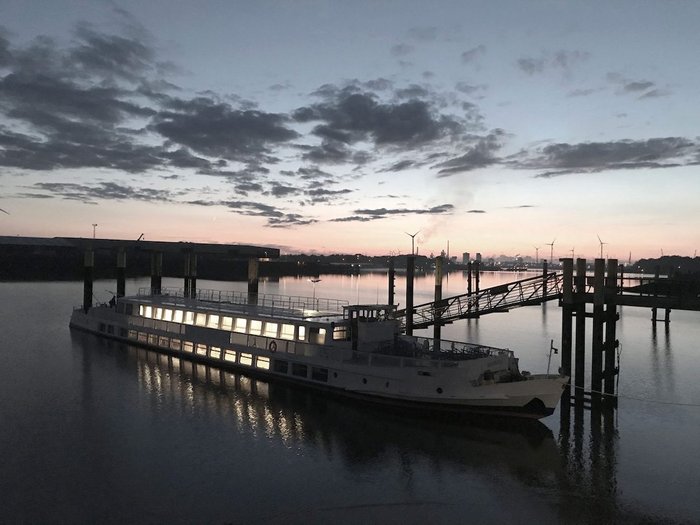
MS „Dauerwelle“: Kunstraum in Bewegung
Die Hochschule für Künste Bremen eröffnet ein umgestaltetes Passagierschiff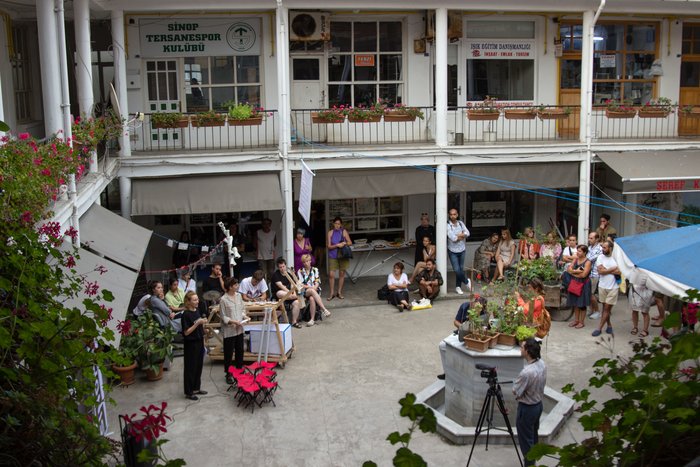 NewsTuesday | 23 July 2019
Live bei der „Sinopale 7“ (16.8.–6.9.)
Eindrücke von der kooperativen Biennale im nordtürkischen Sinop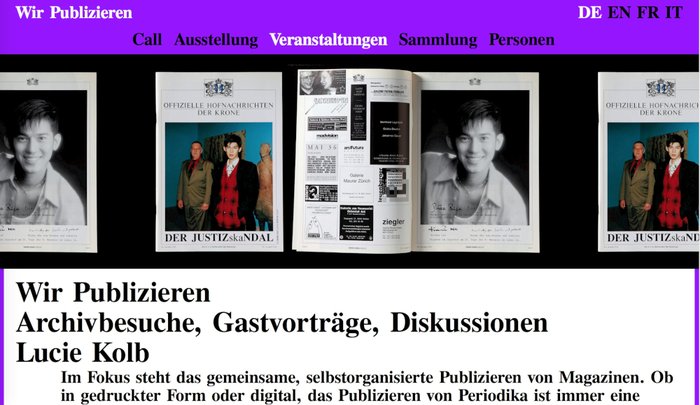 NewsWednesday | 6 February 2019
„Wir publizieren“ – Master-Studio School of Visual Combinations
Projekt des Fachbereichs KuD der HfK mit der HKB zum Herausgeben, Vervielfältigen und Verteilen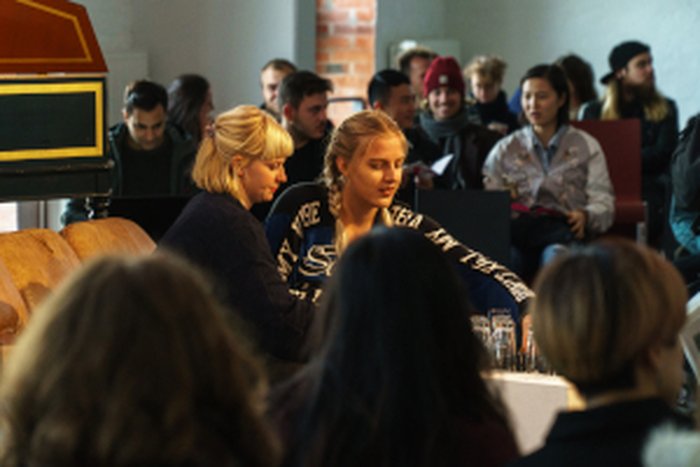 ReviewWednesday | 10 October 2018
Feierliche Semestereröffnung
225 Erstsemester starten in das Wintersemester
- 2 – 5 July 2026 3 p.m.
 Exhibition, Concert, Performance2 – 5 July 2026 3 p.m.
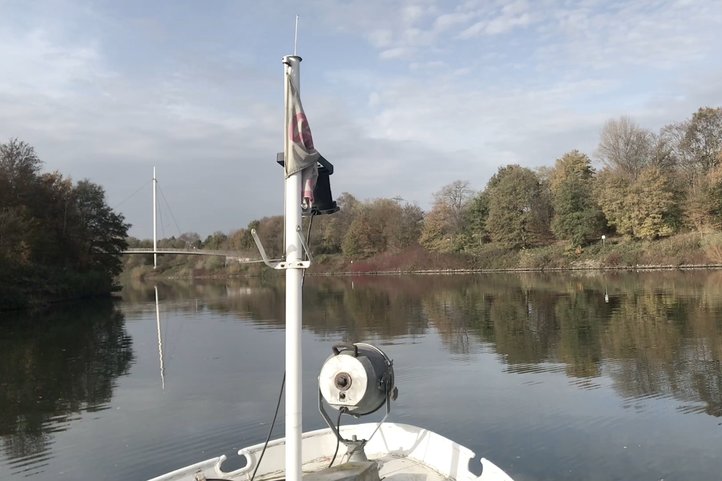
HfK x Breminale 2026: in the same ̶b̶̶o̶̶a̶̶t̶ storm
MS DauerwellePast events - Friday | 12 June 2026 7 p.m.
 ExhibitionFriday | 12 June 2026 7 p.m.
Meisterschüler:innen Exhibition 2026 – Vernissage
Haus Coburg | Städtische Galerie DelmenhorstPast events - Tuesday | 9 June 2026 10 a.m.
 SymposiumTuesday | 9 June 2026 10 a.m.
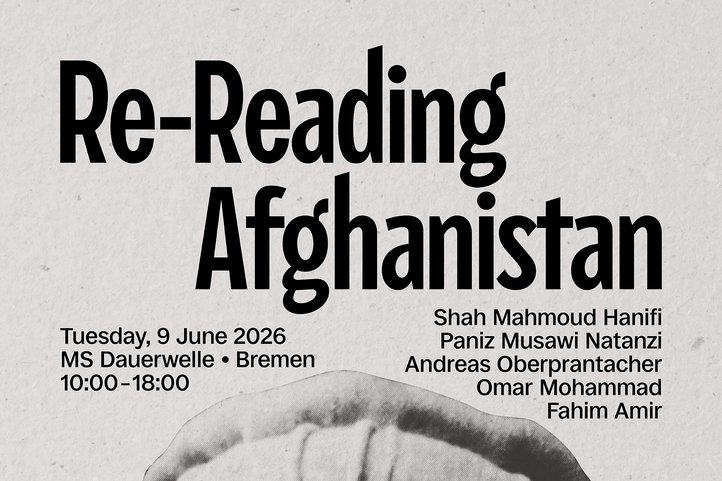
Re-Reading Afghanistan – Visual Worlds and Knowledge Orders in the Afghanistan Journal (1974–1982)
MS DauerwellePast events


